Unless you were raised in a textile town where cotton was king, the terms “lint head” and cotton mill villages may be new to you. Lint head was the reference used when you were raised in the village. If you lived on the mill village it was an accepted practice to poke fun at each other as being a “lint head”, somewhat a badge of courage. However if you did not reside in the village, being called a “lint head” were fighting words.
I was raised in a small Southern textile town with a population of 600 people. To my knowledge the U.S. Government never did take a census, so it could have been more or less 600 citizens. As faith or geography would have it, the town was divided by the Southern Railroad System. One side of the tracks was the affluent neighborhood comprised of textile executives and business owners. The locals referred to this neighborhood as Front Street. It was imminent of the “Old South”. Larger than life mansions with pristine yards, large oak trees and more than one car in the driveway. Southern Living Magazine in today’s world would be drooling for a photo op. of the homes that lined Front Street.
The other side of the tracks was where the blue collar (to phrase a term) workers resided. The homes were small in design but well kept. The one thing in common was a front porch that spanned the length of the residence. The porches were the social gathering place for religion, gossip, and topics such as, “if that my was son or daughter doing that I would skin their britches”. The latter was never spoken in the presence of the parents of the misfit culprits.
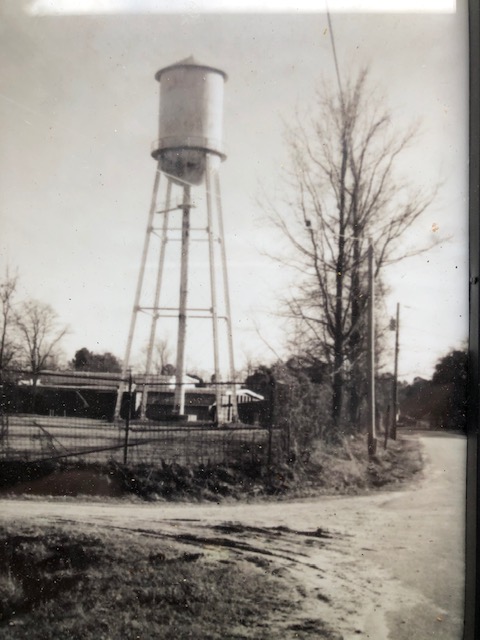
Then there was the village. The houses were located so close to the mill, you could hear the machinery running at night. This of course was by design by the mill owners. The workers were within walking distance of the workplace and had no excuses for being absent. The houses were wood frame structures consisting of a living, room, kitchen, and two or three bedrooms. As long as you were an employee of the mill, you had a roof over your head courtesy of the mill owners. If you decided to look for greener pastures (other employment) you would be asked to vacate the premises. The homes were heated with a fireplace or an oil heater. Water for bathing, cleaning, and cooking came from a manual water pump near the back porch. The facility was the outhouse with a natural septic tank. A common phrase, ” if you are going to the toilet, be careful of spiders”. A Sears & Roebuck catalog was the preferred reading material in the outhouse. No matter your social standing in town, everyone had a Sears & Roebuck catalog. It offered the dream of, “wish I may, wish I might have my wish come true tonight”.
The laborious task of washing clothes was a family affair. Within reason it was always on a Saturday, weather permitting. There were five basic steps for wash day:
Step 1. build a fire around the cast iron wash pot to heat the water-step 2, dissolving the lye soap in the hot water-step 3, using a paddle to agitate the clothes in a swirling motion to insure proper cleaning-step 4, ring the clothes out by hand and hang on the clothes line-step 5, bring the dried clothes in for ironing. Presidents was given to the clothes you would be wearing to church on Sunday. And today we often wonder, “what happened to the weekend”. Duh!!!!
Thinking back to those Saturday’s of days gone by, it was at times tedious labor and hardships, but the aroma of clean clothes drying in a slight breeze was one of the simple pleasures of life. It is often I reminiscence of the blood, sweat and tears endured in my up bringing. However in retrospect in some form or fashion they all became a labor of love.

 Joe's Bakers Dozen