THINGS: SMALL TOWN FOLKLORE

For years North Carolina has been considered a hotbed for Southern folklore. Those of us drawn to “fact or fiction” are familiar with the Maco -Light (Joe Baldwin), the Indian legend from the Dismal Swamp, and the Beast of Bladenboro. At your next social, light some candles, pour some wine, grab an afghan and indulge in North Carolina folklore. Trust me, if the young and old do not experience chill bumps, check your driveway for a UFO. My hometown was no different from numerous small towns with its own in-house unexplained happenings.

Two of the best storytellers were my grandfathers, Troy and Joe (my namesake). Both were very different personalities. Troy was more of a “devil make care” personality. He loved his moonshine and at times his long periods of absence from the family, but was lovable and easy to forgive. His stories usually began with ” true story”, which we swallowed line, hook, and sinker. Joe on the other hand was a quite man of few words. Almost mysterious in his appearance, tall and thin with the ever present five o’clock shadow. Joe wore his Indiana Jones hat low almost covering the piercing blue eyes. His voice was much like his demeanor, soft and slow. This made his stories more believable requiring you to hang onto every word.

Troy at times would be asked to perform an unusual service for a dying man. Just before they experienced what was referred too as the death rattle ( last breath) , the family asked if he would shave the person in preparation for the undertaker. According to the story this particular person had wronged his neighbors, abused his family, and lived on the wrong side of the law for his own selfish gain. Troy had almost finished shaving the man, when his eyes opened in terrifying horror His last words were, ” I see the devil coming for me”. He died minutes later.

On the mill village almost every neighbor was considered family. Being a close knit community, when a family member was near death comfort was offered by sitting up with the family. It was a somber ritual that could last well into the night. The sitting room was dimmed with very little conversation . Every thirty minutes or so, a family member would quietly check to see if the relative was still breathing. The focal point of the sitting room was the mantle. Here was the history of the family in pictures, usually comprised of a single family picture. Late in the evening suddenly a small dim light appeared from nowhere in the sitting room. It moved around the room, bobbing up and down heading toward the mantle. The mysterious light settled on the family picture directly on the face of the dying family member. Within minutes of this unexplained happening, the family member passed away.

Joe lived a stone’s throw from the cotton mill. Just down the small dirt road was an elderly lady that walked her milk cow to a pasture every morning and returning for it later in the evening. Weather on the porch on not, you could always tell when the lady was passing by the constant clatter of the cow bell. The mutual greeting in the evening was a slight wave or a nod of the head just to be neighborly. Sitting on his porch after work, Joe realized he had not seen the little lady for a few weeks. It was later he got the word she had passed away and the family sold the milk cow. Years after her death, Joe was sitting on his porch as night was settling in. At first he heard the rattle of the cow bell, then an apparition on the little lady walking her milk cow. As quickly as it appeared it was gone. The apparition was so real, Joe walked to the small dirt road to see if there were hoof tracks. There was nothing to be found.

LINT HEADS & COTTON MILL VILLAGES

Unless you were raised in a textile town where cotton was king, the terms “lint head” and cotton mill villages may be new to you. Lint head was the reference used when you were raised in the village. If you lived on the mill village it was an accepted practice to poke fun at each other as being a “lint head”, somewhat a badge of courage. However if you did not reside in the village, being called a “lint head” were fighting words.

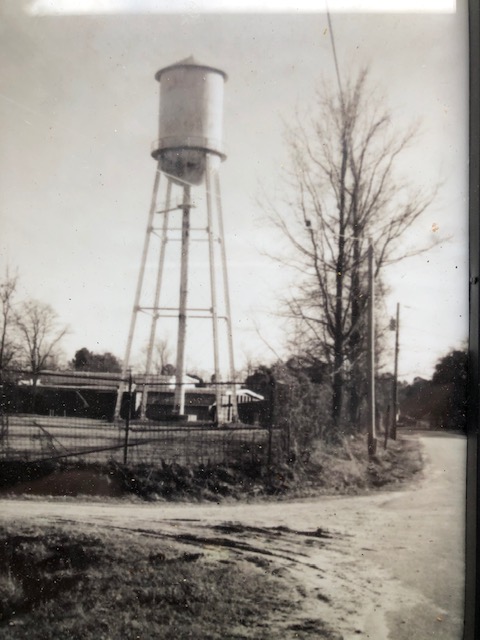
I was raised in a small Southern textile town with a population of 600 people. To my knowledge the U.S. Government never did take a census, so it could have been more or less 600 citizens. As faith or geography would have it, the town was divided by the Southern Railroad System. One side of the tracks was the affluent neighborhood comprised of textile executives and business owners. The locals referred to this neighborhood as Front Street. It was imminent of the “Old South”. Larger than life mansions with pristine yards, large oak trees and more than one car in the driveway. Southern Living Magazine in today’s world would be drooling for a photo op. of the homes that lined Front Street.

The other side of the tracks was where the blue collar (to phrase a term) workers resided. The homes were small in design but well kept. The one thing in common was a front porch that spanned the length of the residence. The porches were the social gathering place for religion, gossip, and topics such as, “if that my was son or daughter doing that I would skin their britches”. The latter was never spoken in the presence of the parents of the misfit culprits.

Then there was the village. The houses were located so close to the mill, you could hear the machinery running at night. This of course was by design by the mill owners. The workers were within walking distance of the workplace and had no excuses for being absent. The houses were wood frame structures consisting of a living, room, kitchen, and two or three bedrooms. As long as you were an employee of the mill, you had a roof over your head courtesy of the mill owners. If you decided to look for greener pastures (other employment) you would be asked to vacate the premises. The homes were heated with a fireplace or an oil heater. Water for bathing, cleaning, and cooking came from a manual water pump near the back porch. The facility was the outhouse with a natural septic tank. A common phrase, ” if you are going to the toilet, be careful of spiders”. A Sears & Roebuck catalog was the preferred reading material in the outhouse. No matter your social standing in town, everyone had a Sears & Roebuck catalog. It offered the dream of, “wish I may, wish I might have my wish come true tonight”.

The laborious task of washing clothes was a family affair. Within reason it was always on a Saturday, weather permitting. There were five basic steps for wash day:

Step 1. build a fire around the cast iron wash pot to heat the water-step 2, dissolving the lye soap in the hot water-step 3, using a paddle to agitate the clothes in a swirling motion to insure proper cleaning-step 4, ring the clothes out by hand and hang on the clothes line-step 5, bring the dried clothes in for ironing. Presidents was given to the clothes you would be wearing to church on Sunday. And today we often wonder, “what happened to the weekend”. Duh!!!!

Thinking back to those Saturday’s of days gone by, it was at times tedious labor and hardships, but the aroma of clean clothes drying in a slight breeze was one of the simple pleasures of life. It is often I reminiscence of the blood, sweat and tears endured in my up bringing. However in retrospect in some form or fashion they all became a labor of love.

Welcome to Joe’s Bakers Dozen 10/16

Welcome to Joe’s Bakers Dozen

If you clicked on Bakers Dozen searching for a bread or doughnut recipe, sorry wrong pew. You may want to google Krispy Kreme.

Actually a bakers dozen dates back to Henry II (1154-1189). Bakers in that time period were held accountable for the exact weights for the breads they sold. If it was determined the breads did not meet the weight standard, bakers were punished for the mistake. To avoid that possibility bakers would put an extra loaf of bread in the bag to overcome any form of punishment. So the term Bakers Dozen.

Now in my mid seventies with various employment careers as an educator, a probation officer and finally retiring from the private business sector, I decided to stick my toe in the water and try blogging. Playing the devil’s advocate, I understand the thought process of ” how can a country bumpkin from a small Southern town begin to spark my interest with trivia I could easily find on Wikipedia”? Like millions of folks I know a little bit about a lot of things and very little about tons of things. My life has been a roller coaster of people, places and things. Many of these are in direct correlation for my thinning grey hair. Damon Runyon wrote short stories about the characters and social status of life on N.Y.’s Broadway. To imply this blog is remotely close to Mr. Runyon’s portrayal of those characters is a far stretch of one’s imagination. It does however give one inspiration to ” walk a mile in his shoes”. The Dozen is a cornucopia of my experiences that good or bad have shaped my life. My leap of faith blogging may have the same results as Edward John Smith, Captain of the Titanic. By under estimating the tip of the iceberg, I could go down on my maiden voyage.